The Art and Utility of Seamless Musical Patterns in Modern Design
Music and visual art have always shared a deep, symbiotic relationship. One of the most enchanting ways this connection manifests is through seamless patterns with musical symbols—designs that repeat infinitely without visible borders, weaving notes, clefs, staves, and instruments into a continuous visual rhythm. Whether you are a graphic designer, a music educator, a small business owner, or simply someone who appreciates the intersection of sound and imagery, understanding these patterns opens up a world of creative possibility. This article explores what seamless musical patterns are, why they matter, how they are created, and where they fit into our daily visual landscape.
What Exactly Are Seamless Musical Patterns?
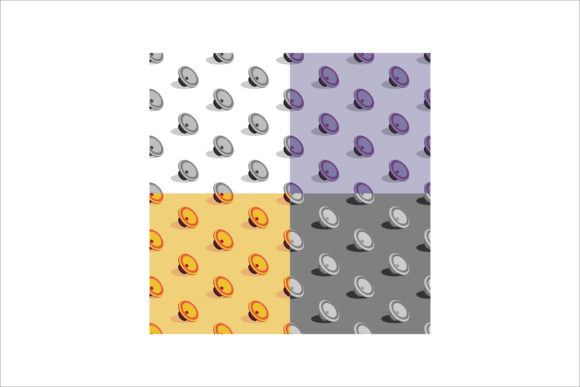
At their core, seamless patterns are tiling designs that repeat across a surface without any noticeable breaks or edges. When you apply a seamless pattern to a large area—be it a bolt of fabric, a website background, or a smartphone case—the repetition flows naturally, as if the design was always meant to continue indefinitely. A musical seamless pattern specifically incorporates elements from the world of music: quarter notes, eighth notes, treble clefs, bass clefs, grand staves, guitars, pianos, drums, sound waves, and lyrical flourishes.
Unlike a simple scattered arrangement of musical symbols, a true seamless pattern requires precise engineering. Every element that exits one edge of the design tile must re-enter from the opposite edge in perfect alignment. This technical requirement ensures that when the tile is duplicated side by side, the viewer perceives a single, uninterrupted field of musical motifs. The result is a design that feels both structured and organic—much like music itself.
The Historical Roots of Musical Imagery in Ornamentation
The impulse to decorate objects with musical symbols is far from new. Manuscript illuminations from the medieval period often featured intricate borders filled with musical notation and angelic musicians. During the Renaissance, instrument makers adorned harpsichords and violins with painted patterns that celebrated the very purpose of the objects they embellished. In the Victorian era, sheet music covers became elaborate works of art, often framed with scrolling vines, ribbons, and repeated musical motifs that hinted at seamless thinking long before digital tools made true tiling easy.
What has changed in the modern era is accessibility and precision. Digital illustration software allows designers to create seamless patterns with mathematical exactness. Anyone with a creative vision can now produce a set of seamless musical patterns suitable for commercial printing, web design, or personal crafting. This democratization has led to an explosion of musical pattern designs, each reflecting different genres, moods, and cultural influences—from classical elegance to bold, graffiti-style hip-hop aesthetics.
Why Music Lends Itself So Naturally to Pattern Design
Music is inherently repetitive and structured. Rhythms cycle, melodies return, and harmonic progressions loop. A seamless pattern mirrors this quality visually. When we see a repeating pattern of musical notes, our eyes move across the design much like our ears follow a melodic line. There is a visual rhythm that emerges from the spacing, size variation, and directional flow of the symbols. Designers often speak of creating a visual tempo through pattern density—tight clustering of symbols conveys energy and percussiveness, while sparse, airy arrangements evoke calm, ambient soundscapes.
Why Seamless Musical Patterns Hold Practical Significance
Beyond their aesthetic appeal, these patterns serve functional roles in branding, education, merchandising, and user experience design. Consider the following applications that highlight their versatility:
- Brand Identity: Music schools, recording studios, orchestras, and independent musicians often use musical patterns in their logos, packaging, and promotional materials to instantly communicate their industry affiliation.
- Textiles and Fashion: From concert merchandise to high-fashion runways, fabric printed with seamless musical patterns makes a statement. A scarf covered in flowing treble clefs or a dress patterned with vintage sheet music excerpts connects the wearer to musical culture.
- Interior Design: Wallpapers, upholstery, and bedding featuring subtle musical patterns can transform a music room, studio, or child's bedroom into an immersive thematic space without feeling cluttered or chaotic.
- Digital Interfaces: App developers and website designers use musical seamless patterns as backgrounds for music streaming platforms, educational apps, and event pages to set a thematic tone without distracting from core content.
- Stationery and Event Materials: Wedding invitations for music-loving couples, recital programs, and music festival flyers all benefit from elegantly repeating musical backdrops.
How Designers Construct a Seamless Musical Pattern
Understanding the creation process helps users appreciate the craftsmanship behind these designs and make informed choices when selecting or commissioning patterns. The workflow typically follows a sequence of intentional steps:
- Concept and Mood Definition: The designer decides on the musical genre or era that will inform the symbol selection. A Baroque-inspired pattern might use ornate clefs and manuscript textures, while a modern electronic music pattern could incorporate equalizer bars and synthesizer waveforms.
- Symbol Sourcing or Illustration: Designers either draw custom musical elements or work from licensed vector sets. Consistency in line weight, style, and level of detail is crucial for a cohesive final product.
- Tile Boundary Setup: Using software such as Adobe Illustrator, Affinity Designer, or Procreate, the designer establishes a square or rectangular artboard that will become the repeatable tile. The dimensions must be carefully considered, as they determine the frequency of repetition.
- Element Placement with Edge Awareness: This is the critical phase. Symbols placed near the top edge must have corresponding partial symbols at the bottom edge that complete them when tiled. Many designers use a split-and-offset technique, where elements that cross boundaries are duplicated and precisely repositioned to guarantee seamlessness.
- Testing and Refinement: The pattern is tested by tiling it across a large canvas. Designers look for unintended gaps, awkward clustering, or visual lines that disrupt the organic flow. Adjustments are made iteratively until the repetition becomes invisible.
- Export and Format Optimization: The final pattern is exported in formats suitable for various uses—high-resolution raster files for print, lightweight SVGs for web, and layered files for clients who may need to adjust colors later.
Common Misunderstandings About Seamless Musical Patterns
Despite their widespread availability on design marketplaces, several assumptions about these patterns deserve clarification. Addressing these helps both buyers and creators align their expectations with reality.
Misunderstanding 1: Any Repeating Musical Design Is Seamless. Not all repeating designs are truly seamless. A pattern that simply places symbols at regular intervals may still show visible grid lines or awkward breaks. True seamlessness requires the edge-continuity technique described above. When evaluating a pattern, zoom out and look for horizontal or vertical seams—if you can spot where one tile ends and the next begins, the pattern is not truly seamless.
Misunderstanding 2: More Symbols Mean a Better Pattern. Density does not equal quality. An overcrowded pattern can feel noisy and overwhelming, especially when used as a background behind text. The best musical patterns balance filled space with negative space, allowing the eye to rest and the individual symbols to retain their recognizable shapes. Sometimes a sparse arrangement of elegant, well-drawn notes makes a stronger impression than a dense mosaic of every musical symbol imaginable.
Misunderstanding 3: Musical Patterns Are Only for Musicians. While musicians and music organizations are natural audiences, the appeal of musical imagery extends far beyond. Music is a universal human experience. A seamless musical pattern can evoke nostalgia, celebrate cultural heritage, or simply serve as a beautiful abstract design. Many people who do not play an instrument still feel a deep emotional connection to musical symbolism and incorporate it into their personal or professional projects.
Choosing the Right Musical Pattern for Your Project
Selecting from a set of seamless patterns with musical symbols requires thoughtful consideration of context. Here are guiding questions to help you narrow your options:
- What is the emotional tone you want to convey? Soft, hand-drawn notes in watercolor suggest gentleness and creativity. Bold, geometric renditions of musical symbols convey modernity and energy. Vintage sheet-music patterns evoke nostalgia and tradition.
- What is the viewing distance? Patterns meant for close-up viewing on a phone case or notebook cover can include finer detail. Patterns intended for large-format printing, such as banners or wall murals, benefit from bolder, more legible symbols that read well from a distance.
- Will text or other elements overlay the pattern? If yes, prioritize patterns with lower contrast and a lighter overall value. A dark, high-contrast musical pattern can make overlaid text difficult to read, undermining the functionality of your design.
- Does the style align with the intended musical genre? A classical music event poster may clash with a pattern full of electric guitars and drum kits. Similarly, a rock concert flyer might feel mismatched with delicate, calligraphic musical notation. Authenticity in symbol choice strengthens the overall message.
The Role of Seamless Musical Patterns in Education and Creativity
Music educators have long understood that visual stimuli can reinforce auditory learning. Classrooms decorated with musical patterns keep musical concepts visually present, subtly reinforcing symbol recognition for young learners. Worksheets and activity books that incorporate seamless musical borders make practice exercises feel more engaging and less clinical. In creative fields, these patterns serve as design prompts—a fashion student might drape a musical-print fabric into a garment, or a digital artist might use a musical pattern as a clipping mask for typography experiments.
Furthermore, the act of creating a seamless musical pattern can itself be an educational exercise. Aspiring designers learn about symmetry, repetition, negative space, and the technical constraints of tiling. Music students who try their hand at pattern design often deepen their appreciation for the visual beauty of the symbols they use daily in notation, seeing them not just as instructions for performance but as aesthetic forms in their own right.
Looking Ahead: The Future of Musical Pattern Design
As artificial intelligence and generative design tools become more sophisticated, the landscape of seamless pattern creation is evolving. AI-powered platforms can now generate endless variations of musical patterns based on text prompts, offering designers rapid ideation capabilities. However, the human touch remains irreplaceable for nuanced decisions about cultural appropriateness, emotional resonance, and brand alignment. The most compelling musical patterns will likely continue to emerge from a collaboration between human creativity and technological efficiency.
Another emerging trend is the integration of interactive and animated seamless patterns in digital media. Imagine a website background where musical notes gently float across the screen while maintaining a seamless tiling structure, or an app interface where the pattern responds to the user's touch with subtle rhythmic shifts. These dynamic applications push the concept of the seamless musical pattern beyond static repetition into the realm of living, breathing visual compositions that echo the temporal nature of music itself.
Conclusion: Embracing the Visual Language of Music
A set of seamless patterns with musical symbols is far more than a decorative resource—it is a bridge between two fundamental forms of human expression. These patterns capture the structure, emotion, and universality of music in a format that can wrap around a coffee cup, scroll across a screen, or adorn an entire wall. By understanding what makes a pattern truly seamless, how these designs are constructed, and how to select the right one for a given context, you equip yourself to use musical imagery with greater intention and impact.
Whether you are designing for a client, teaching a classroom of eager learners, or simply seeking to surround yourself with the beauty of musical notation, seamless patterns offer a versatile and enduring solution. In a world that often separates the auditory from the visual, these designs remind us that rhythm, harmony, and repetition belong as much to the eye as they do to the ear. As you explore the available collections of musical seamless patterns, take a moment to appreciate the silent melody each one holds—waiting to amplify whatever surface it graces.