The Design Potential of Seamless Halloween Patterns in Modern Visual Projects
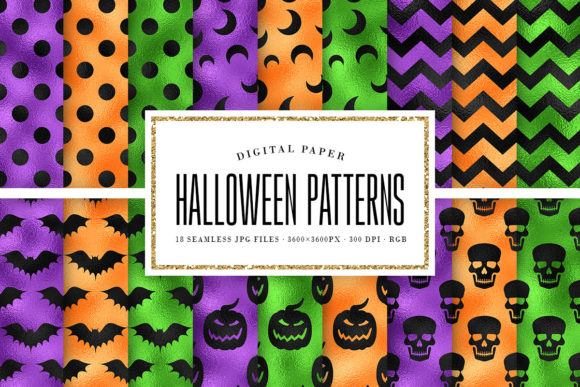
Every October, a wave of orange, black, and purple sweeps through both digital and physical spaces. Behind many of the most polished seasonal displays lies a design technique that has quietly transformed how we approach festive aesthetics: the use of seamless Halloween patterns. These repeating motifs—whether they feature grinning jack-o'-lanterns, delicate spiderwebs, or stylized bats—offer a level of flexibility that single-image graphics simply cannot match. Understanding their structure, applications, and the reasons they have become indispensable to diverse audiences reveals a great deal about contemporary design workflows and the demand for scalable, high-quality visual assets.
What Defines a Truly Seamless Pattern
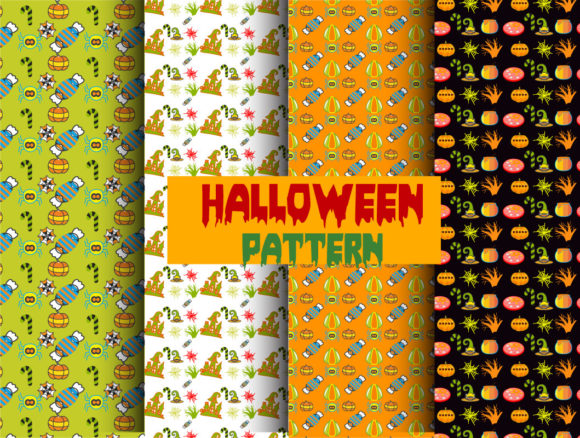
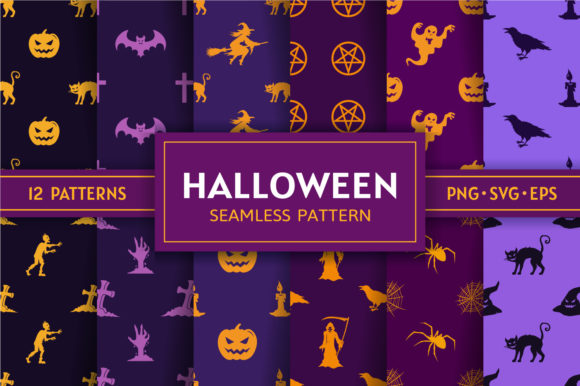
At its core, a seamless pattern is a tileable image where the edges align perfectly with one another, creating the illusion of an infinite, unbroken surface. When applied to Halloween themes, this technical requirement demands careful planning. A designer cannot merely scatter pumpkins across a canvas and call it complete. Each element must be positioned so that when the tile repeats horizontally and vertically, no visible seams, abrupt cutoffs, or awkward gaps appear. This often involves splitting objects that touch one edge and continuing them on the opposite side—a process that requires both spatial reasoning and an intimate understanding of the motif's rhythm.
The characteristics that elevate seamless Halloween patterns from functional to compelling include balanced density, intentional color palettes, and a clear focal hierarchy. A pattern overloaded with competing elements becomes visually chaotic when tiled across a large surface. Conversely, one that is too sparse may feel disconnected. The most effective examples strike a harmony between negative space and motif distribution, allowing the eye to travel naturally without fixating on the repetition itself. Dark backgrounds with luminous accents—think glowing green potion bottles against deep charcoal—create depth, while lighter, whimsical arrangements featuring candy corn and friendly ghosts suit more playful contexts.
How Different Users Leverage These Patterns
The versatility of tileable Halloween designs means they serve remarkably different purposes depending on who is wielding them. Examining these varied use cases illuminates why the format has gained such traction.
Small Business Owners and Retail Packaging
For a bakery launching limited-edition Halloween cupcakes, packaging becomes a silent ambassador. A seamless pattern applied to box liners, sleeve wraps, or even tissue paper transforms an ordinary container into a seasonal experience. Because the pattern repeats without interruption, it can be scaled to fit any box dimension without distortion. The same design file can cover a tiny cookie bag or a large gift box with equal precision. This scalability reduces the need for multiple design variations and streamlines production timelines—an advantage that resonates strongly with entrepreneurs managing tight budgets and seasonal deadlines.
Educators and Classroom Resources
Teachers preparing October lesson materials often seek visuals that engage without distracting. Seamless Halloween patterns appear on bulletin board backgrounds, worksheet borders, digital slide decks, and printable reward stickers. Because they are designed to repeat, a single sheet can be printed multiple times and pieced together to cover a large display area. Educators who create their own resources value patterns that incorporate subtle educational elements—alphabet letters dressed as monsters or number-themed spiderwebs—allowing decoration to double as a learning tool. The non-abrasive nature of a well-designed seamless repeat also means it can serve as a backdrop without overwhelming the primary content.
Crafters and Hobbyists
The crafting community has embraced digital seamless patterns with enthusiasm. Scrapbook paper, fabric printing, decoupage projects, and vinyl cutting for custom apparel all benefit from tileable designs. A hobbyist designing custom Halloween pajamas can upload a seamless pattern to a print-on-demand fabric service and receive yardage where the design flows continuously, free of awkward breaks at seam lines. This continuity matters especially for projects like table runners, where a disjointed pattern would immediately betray its origins. The ability to source or create seamless Halloween patterns and then apply them across diverse substrates—from heat-transfer vinyl to printable shrink plastic—has expanded the creative possibilities for home-based makers.
Digital Content Creators and Streamers
For those producing online content, visual consistency contributes to brand identity. A Twitch streamer hosting Halloween charity events might use a seamless pattern as an overlay border, a panel background, or an alert animation texture. Webcomic artists incorporate repeating Halloween motifs into scene backgrounds to establish atmosphere without redrawing complex details for every panel. Social media managers designing quote graphics or announcement posts find that patterns provide instant visual cohesion across a campaign series. Because seamless tiles are inherently flexible, they adapt to various aspect ratios and platforms without requiring extensive rework.
Technical Considerations When Selecting or Creating Patterns
Choosing the right tileable design involves more than aesthetic preference. Several practical factors influence how a pattern performs in real-world applications.
Resolution and file format top the list of concerns. A pattern intended for web use may suffice at 150 DPI, but print applications—especially those involving large-format banners or high-quality packaging—demand 300 DPI or higher. Vector-based patterns offer maximum scalability, though raster files remain common and perfectly serviceable when prepared at appropriate dimensions. File formats like PNG support transparency, which can be advantageous for layering patterns over colored backgrounds or photographs.
Tile size affects both performance and perception. A very small tile, perhaps 500 by 500 pixels, repeats frequently and can create an overly busy, wallpaper-like effect if the motif density is high. Larger tiles, such as 2000 by 2000 pixels or more, allow for greater variation within each repeat unit—scattered elements, varied cluster sizes, and subtle asymmetries that make the repetition less obvious. Designers often aim for a sweet spot where the tile is large enough to feel organic but small enough that file sizes remain manageable, particularly for web loading speeds.
Color mode is another practical consideration often overlooked by newcomers. RGB patterns work beautifully on screens but may shift unexpectedly when converted to CMYK for print. Rich oranges and deep purples, staples of the Halloween palette, are particularly susceptible to dulling during this transition. Professionals who anticipate both digital and physical uses either prepare separate versions or design within a color space that facilitates conversion, consulting soft proofs to catch potential disappointments before production begins.
The Role of Seamless Patterns in Brand Storytelling
Seasonal branding presents a unique challenge: how does a company participate in Halloween festivities while maintaining its core identity? Seamless Halloween patterns offer a solution by allowing brands to incorporate thematic elements without overhauling their visual language. A coffee shop known for minimalist design might adopt a pattern of delicate, line-drawn ghosts on its usual kraft-brown cup sleeves. A tech company's internal newsletter might feature a subtle circuit-board-meets-spiderweb pattern that nods to Halloween while staying true to its industry.
This approach to seasonal adaptation values restraint. Rather than saturating every surface with loud imagery, brands can deploy patterns strategically—on shopping bags, email headers, or in-store signage—creating moments of festive recognition that feel intentional rather than obligatory. The seamless nature of the pattern reinforces a sense of polish, suggesting that care was taken in the execution rather than a hasty clip-art approach.
Observations on Pattern Trends and Evolving Aesthetics
Over recent years, Halloween pattern design has moved in several notable directions. The traditional bright orange-and-black palette, while still prevalent, now shares space with moodier alternatives. Muted terracotta, dusty mauve, and ink-blue backgrounds appear alongside metallic gold and copper accents, appealing to audiences seeking sophistication over overt spookiness. Botanical elements—autumnal leaves, dried florals, and trailing vines—frequently intermingle with classic Halloween icons, creating patterns that bridge the gap between fall harvest and Halloween specifically.
Another trend involves the layering of illustration styles within a single pattern. Flat, vector-style pumpkins might coexist with hand-drawn, sketchy witch hats and watercolor-textured moons. This eclectic approach, when executed with cohesive color treatment, produces patterns rich enough to reward close inspection—a quality valued in products like fabric where the pattern will be experienced at intimate range. The influence of vintage Halloween ephemera, with its slightly off-register printing and muted patina, has also inspired pattern designers to incorporate subtle texture and imperfect registration effects, adding warmth to what could otherwise feel digitally sterile.
Practical Guidelines for Pattern Integration
Applying a seamless pattern successfully requires attention to context. A pattern that captivates on a phone screen may overwhelm when stretched across a website's full-width hero section. Testing at multiple scales and on different devices reveals whether the motif density holds up. For print projects, ordering a proof swatch before committing to a large run can prevent costly surprises related to color reproduction or scale perception.
Pairing patterns with solid colors, typography, and white space preserves readability and visual breathing room. A Halloween-themed event invitation might use a pattern as a border or a subtle background layer at reduced opacity, allowing the text to remain the focal point. Layering a semi-transparent color block over a portion of the pattern creates a usable area for content while still showcasing the design around the edges.
Those sourcing seamless Halloween patterns from marketplaces or design platforms benefit from examining the tile preview carefully. Reputable designers often provide a zoomed-out mockup or a grid repeat preview that reveals how the pattern behaves in repetition. Watching for unintentional lines, clustering artifacts, or awkward negative spaces at the tile boundaries can save frustration downstream. Licensing terms also warrant attention, particularly for commercial applications involving physical products for resale, where standard licenses may not suffice.
Why Seamless Patterns Outperform Static Graphics
The advantage of seamless over static is straightforward yet profound: adaptability without degradation. A static Halloween illustration has fixed dimensions and a fixed composition. Enlarging it beyond its native resolution introduces blur; cropping it to fit a different aspect ratio may remove critical elements. A seamless pattern, by contrast, can fill any container of any shape or size. It can wrap around three-dimensional objects in rendering software, tile across an irregularly shaped die-cut sticker sheet, or extend infinitely as a website background that scrolls with the user.
This adaptability translates into economic efficiency. A single well-designed pattern file can serve as a desktop wallpaper, a printed fabric repeat, a social media background, a product packaging element, and a video overlay—all without modification. For resource-conscious creators, this multipurpose capability justifies the investment in quality pattern assets.
Closing Reflections on Craft and Utility
The world of seamless Halloween patterns sits at an interesting intersection of artistic craft and practical utility. On one side, the pattern designer engages in meticulous composition, color theory, and motif development. On the other, the end user—whether a teacher, a shop owner, a content creator, or a crafter—benefits from a resource that solves real problems of scale, consistency, and seasonal expressiveness. This dual nature explains why the format has become embedded in creative workflows across such a wide spectrum of disciplines.
As October approaches each year, the demand for these designs reminds us that seasonal creativity is not merely about decoration. It reflects a desire to participate in shared cultural moments with intentionality and style. A well-executed seamless pattern supports that desire quietly, providing the structural foundation upon which countless Halloween projects, products, and experiences are built.