What Are Cute Animals Seamless Patterns and Why Do They Matter in Design Today?
If you have ever scrolled through a digital marketplace, browsed fabric swatches, or admired whimsical stationery, chances are you have encountered cute animals seamless patterns without realizing the artistry and intention behind them. These designs, featuring repeating motifs of charming creatures, have quietly become a staple in both commercial and personal creative projects. But what exactly are they, and why do they hold such enduring appeal across industries ranging from children’s apparel to web design? Let us explore the concept from the ground up, unpacking its significance and practical relevance in today’s visually driven world.
Understanding the Basics of Seamless Patterns
To fully appreciate cute animals seamless patterns, we first need to understand what a seamless pattern is. In simple terms, a seamless pattern—also called a repeating pattern or tileable design—is an image that can be duplicated and placed next to itself without any visible edges, breaks, or interruptions. When the pattern repeats both horizontally and vertically, it creates the illusion of an infinite, continuous surface. This principle applies whether the final output is printed on fabric, used as a website background, or wrapped around a product mockup.
The key challenge for designers is ensuring that the edges of the pattern block align perfectly. This requires careful planning and often specialized software like Adobe Illustrator or Procreate. The result, however, is well worth the effort: a design that looks clean, professional, and versatile enough to be scaled up or down without losing its cohesive feel.
What Separates "Cute" Animals from Generic Animal Motifs?
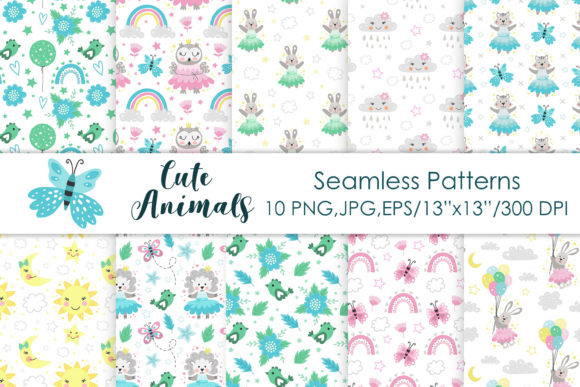
Not all animal patterns are automatically "cute." The category of cute animals seamless patterns refers specifically to designs that emphasize adorable, approachable, and often stylized representations of creatures. Think round cheeks, oversized eyes, softened silhouettes, and playful expressions. Common subjects include kittens, puppies, bunnies, pandas, foxes, koalas, and even less conventional choices like sloths, hedgehogs, or baby alpacas. The unifying thread is an emotional response—these patterns are crafted to evoke warmth, comfort, and delight.
This aesthetic draws heavily from principles seen in kawaii culture, which originated in Japan and celebrates childlike charm and innocence. However, the appeal is universal. Across continents and demographics, humans are neurologically wired to respond positively to features that mimic infantile traits—large heads relative to body size, big eyes, and soft contours. Designers intentionally harness this response when creating cute animals seamless patterns, making them especially effective for products aimed at children, but also for adults seeking nostalgia or a touch of lightheartedness in their surroundings.
The Purpose and Practical Significance of Cute Animals Seamless Patterns
Why invest time in creating or purchasing these patterns? The answer lies in their extraordinary versatility and emotional resonance. A well-designed seamless pattern can transform an ordinary object into something memorable and marketable. Here are some of the most common applications that demonstrate their practical value:
- Textiles and Apparel: From baby onesies adorned with repeating tiny elephants to pajama sets featuring sleepy foxes, fabric designers rely heavily on cute animal motifs. The seamless nature ensures that the pattern remains uninterrupted across seams and cuts.
- Stationery and Paper Goods: Notebooks, wrapping paper, greeting cards, and stickers frequently incorporate these patterns to add personality. A seamless repeating design allows for full coverage without awkward gaps.
- Digital Products and User Interfaces: Websites, mobile apps, and social media graphics often use subtle animal patterns as backgrounds to soften the visual tone and make interfaces feel more friendly and approachable.
- Home Décor: Wallpaper, bedding, curtains, and throw pillows featuring cute animals bring a sense of playfulness into interior spaces, particularly nurseries and children’s rooms, but increasingly also into modern eclectic décor styles.
- Branding and Packaging: Small businesses, especially those in the baby, pet, or eco-friendly sectors, use these patterns on packaging, labels, and promotional materials to build a cohesive and endearing brand identity.
What ties all these uses together is the concept of scalable emotional branding. A cute animals seamless pattern communicates approachability and warmth before a single word is read. In a crowded marketplace, that immediate connection can be a powerful differentiator.
How Cute Animals Seamless Patterns Fit Into Modern Life and Work
In recent years, the boundaries between professional, personal, and creative spaces have blurred. Remote work, side hustles, and the rise of digital entrepreneurship have empowered individuals to infuse more personality into their environments and products. Cute animals seamless patterns fit naturally into this shift. A freelance graphic designer might license a playful woodland creature pattern for a client’s organic snack brand. A teacher creating printable classroom resources might use a repeating design of smiling dinosaurs to make learning materials more engaging. A parent planning a birthday party could print custom banners and tablecloths featuring a seamless pattern of cheerful kittens.
The accessibility of design tools and online marketplaces like Etsy, Creative Market, and Spoonflower has also lowered the barrier to entry. Artists and hobbyists can now create and sell their own seamless pattern designs, turning a love for drawing animals into a viable income stream. Buyers, in turn, benefit from an ever-expanding library of unique, affordable designs that can be applied to countless projects. This ecosystem has democratized pattern design, making cute animals seamless patterns more prevalent and culturally relevant than ever before.
The Role of Technology in Pattern Creation and Distribution
Modern software has revolutionized how seamless patterns are made. Programs like Adobe Photoshop and Illustrator offer pattern preview modes and automated tiling features that allow designers to see repeats in real time. Procreate on the iPad, combined with manual canvas offset techniques, has become a favorite among illustrators for its intuitive, hands-on approach. Even free tools like GIMP and Inkscape support the creation of tiling graphics. This technological accessibility means that a wider range of artistic voices can contribute to the cute animal pattern space, resulting in greater diversity of styles—from watercolor textures and hand-drawn sketches to vector flat illustrations and digital pixel art.
Additionally, print-on-demand services have removed the need for physical inventory. A designer can upload a cute animals seamless pattern to a platform like Redbubble or Society6, and the design automatically becomes available on dozens of products. When a customer orders a duvet cover or a phone case featuring that pattern, the item is printed and shipped on demand. This model significantly reduces risk for creators while giving consumers access to highly specific, niche designs that mass-market retailers might never carry.
Common Misunderstandings and Clarifications
Despite their popularity, several misconceptions surround cute animals seamless patterns. Addressing these can help both designers and buyers make more informed decisions.
- Misunderstanding: "Seamless means it will look perfect at any size." While seamless patterns are designed to repeat cleanly, scaling them incorrectly can introduce unintended visual artifacts or make the repeat too obvious. A pattern that looks balanced at one scale may feel overwhelming or sparse at another. Thoughtful adjustment of scale is essential for each application.
- Misunderstanding: "Cute animal patterns are only for children." Although these patterns certainly dominate the juvenile market, they also appear in adult-oriented contexts. A subtle, minimalist pattern of line-drawn cats on a tote bag or a sophisticated watercolor bird repeat on a silk scarf can appeal to grown-ups who appreciate whimsy without infantilization.
- Misunderstanding: "Any repeating animal image qualifies as a high-quality seamless pattern." True seamless designs require precise edge matching and often clever placement of elements to disguise the repeat grid. Amateur attempts may show visible seams, awkward clustering, or unnatural gaps. Recognizing quality matters, especially for commercial use.
- Misunderstanding: "Licensing a pattern gives me full ownership." In most cases, purchasing a digital pattern file grants a license for personal or limited commercial use, but the copyright typically remains with the original artist. Understanding the terms of use is crucial, particularly for business applications.
Clearing up these points helps build a more knowledgeable community of creators and consumers, which in turn elevates the overall standard of design work available in the market.
Design Principles Behind Effective Cute Animals Seamless Patterns
For those interested in creating their own patterns, several principles consistently yield successful results. While the "cute" factor is subjective, certain structural choices separate amateur attempts from professional-grade designs.
1. Cohesive Color Palettes
Colors set the emotional tone. Pastel hues—soft pinks, mint greens, baby blues—reinforce gentleness, while slightly more saturated tones can add energy without sacrificing charm. Limiting the palette to three to six well-chosen colors helps maintain visual harmony across the repeat.
2. Varied Scale and Rotation
One of the quickest ways to make a pattern feel static is to place all elements at the same size and orientation. Rotating a sleeping fox slightly, scaling a tiny paw print smaller, or scattering secondary elements like hearts, stars, or foliage between the main animal motifs adds rhythm and natural movement.
3. Thoughtful Spacing and Density
Patterns that are too dense can feel chaotic; those too sparse may look disconnected. Striking the right balance involves considering the intended use. A busy, tightly packed design might work wonderfully for a bold statement wallpaper but overwhelm a delicate wedding invitation.
4. Disguised Repeats
The hallmark of a masterful seamless pattern is that the viewer cannot immediately spot where the repeat block begins and ends. Distributing focal elements diagonally, placing small filler motifs near the edges, and testing the pattern across large canvases all contribute to a more organic, fluid result.
5. Consistent Illustration Style
Mixing a hyper-realistic watercolor bunny with a flat vector lion in the same pattern block rarely works. Maintaining a unified style—whether it is hand-drawn, painted, or digital—ensures that the collection of animals feels like a cohesive family rather than a disjointed assortment.
Designers who master these principles find that their cute animals seamless patterns resonate more deeply with audiences and perform better commercially, whether sold as digital assets or applied to physical products.
The Broader Cultural and Emotional Relevance
Beyond their practical applications, cute animals seamless patterns tap into something fundamentally human. In a world that often feels fast-paced and impersonal, surrounding ourselves with gentle, joyful imagery can serve as a small but meaningful act of self-care. The rise of "cozy" aesthetics, cottagecore, and comfort-driven design trends all point toward a collective desire for softness and simplicity. Cute animal patterns, with their innocent charm and nostalgic undertones, sit squarely at the intersection of these movements.
They also bridge generational gaps. A grandparent sewing a quilt from fabric printed with playful puppies shares a visual language that a teenager customizing their digital tablet wallpaper with the same motif can understand. This cross-generational, cross-cultural appeal makes the niche surprisingly resilient and continuously relevant.
How to Start Using Cute Animals Seamless Patterns Today
Whether you are a designer, a small business owner, or simply someone who wants to personalize a project, the pathway forward is straightforward. Begin by exploring reputable design marketplaces to see the range of styles available. Pay attention to licensing terms, file formats, and resolution. If you lean toward creating your own, invest time in learning the basics of seamless tiling in your preferred software and study successful patterns to understand what makes them work. Practice, patience, and a genuine fondness for the subject matter will carry you far.
Ultimately, cute animals seamless patterns are much more than decorative afterthoughts. They represent a thriving intersection of art, commerce, technology, and emotion. They bring warmth to digital spaces, personality to products, and a sense of continuity to creative projects. By understanding their foundations and appreciating their versatility, you equip yourself to use them more effectively—or even to contribute your own voice to this ever-growing design tradition.