Understanding Patterns with Comedy and Tragic Masks in Modern Design
Patterns rooted in classical symbolism carry a weight that purely decorative motifs rarely achieve. Among these, designs featuring comedy and tragic masks stand apart. They draw from millennia of theatrical tradition, instantly evoking the duality of human experience. When you see these twin faces—one grinning, one weeping—woven into a fabric, printed on wallpaper, or etched into home accessories, you are not just looking at a pattern. You are engaging with a visual shorthand for joy and sorrow, performance and authenticity, light and shadow. This article explores what makes patterns with comedy and tragic masks distinct, how they compare with other symbolic or theatrical motifs, and when they might be the right design choice for your space or wardrobe.
What Defines Patterns with Comedy and Tragic Masks
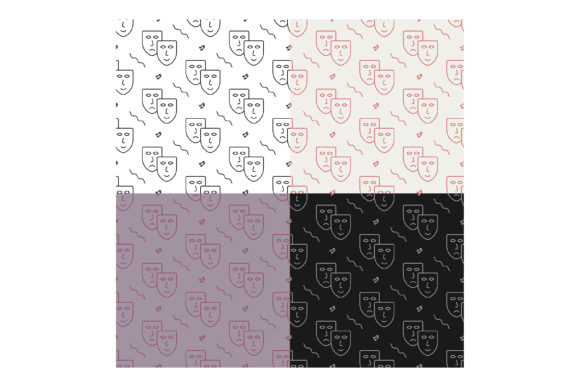
At their core, these patterns repeat or prominently feature the twin masks of ancient Greek theatre—Thalia, the muse of comedy, and Melpomene, the muse of tragedy. The imagery is unmistakable. One face smiles broadly, often with upturned features and a sense of levity. The other frowns or weeps, its mouth drawn downward in an expression of grief. Together, they create a visual dichotomy that has persisted through Roman theatre, Renaissance art, and into contemporary graphic design.
What distinguishes patterns with comedy and tragic masks from other classical motifs is their narrative density. A Greek key pattern or a laurel wreath communicates refinement and heritage, but it does not tell a story about the human condition. The masks do. They remind the viewer that life oscillates between highs and lows, and that both states deserve acknowledgment. Designers often render them in high-contrast linework, metallic finishes, or stylized geometric forms that lend themselves well to repetition across surfaces.
Comparing Theatrical Mask Patterns with Other Symbolic Motifs
When you evaluate this style against alternatives, several distinctions emerge. Consider the broader category of theatrical or performance-inspired designs. You might encounter patterns featuring stage curtains, spotlights, musical notes, or even Shakespearean quotes. These all nod to the performing arts, but they lack the philosophical punch of the masks. A pattern of musical notes feels celebratory. A pattern of spotlights feels energetic. A pattern with comedy and tragic masks feels introspective and layered, offering a more complex emotional register.
Compared with nature-inspired motifs like florals or botanical prints, the mask pattern operates on a different plane altogether. Florals bring organic softness and a connection to the outdoors. They are versatile and broadly appealing. Mask patterns bring intellectual weight and a touch of drama. They are conversation starters, not background fillers. If you want a space to feel calm and universally welcoming, botanicals serve well. If you want it to feel curated, thoughtful, and slightly theatrical, the masks deliver that effect.
Against abstract geometric patterns, the comparison becomes one of explicit meaning versus open interpretation. Geometrics offer rhythm and structure without prescribing a narrative. They adapt easily to minimalist and maximalist settings alike. Patterns with comedy and tragic masks are inherently narrative. They anchor a room or an outfit to a specific cultural reference. That can be a strength in spaces designed for creative work or social gathering, and a limitation in spaces where visual neutrality is preferred.
Material and Medium Choices That Shape the Effect
The impact of these patterns shifts dramatically depending on the material they adorn. On heavyweight cotton or linen textiles, the masks take on a tactile, almost archival quality. They feel like something unearthed from an old theatre trunk—perfect for bohemian interiors or scholarly home libraries. On high-gloss ceramic tiles, the same imagery reads as bold and contemporary, especially when rendered in black and white or gold on deep navy. On wallpaper, scale matters enormously. A small, dense repeat creates a textural effect where the masks become almost subliminal. A large-scale placement where each mask spans several inches turns the wall into a statement mural.
In fashion, the pattern behaves differently on structured garments versus flowing ones. A tailored blazer featuring a subtle mask print in a tonal colorway can read as witty and sophisticated. A flowing maxi dress covered in oversized mask illustrations feels bohemian and festival-ready. Accessories like scarves or pocket squares offer a low-commitment way to introduce the motif. The versatility across mediums is part of why this classic imagery persists, yet the choice of medium should align with how prominently you want the symbolism to read.
Strengths and Tradeoffs of Using Mask Motif Patterns
One clear strength is the pattern's ability to anchor a design concept. If you are decorating a home theatre, a creative studio, a music room, or even a bar area, patterns with comedy and tragic masks instantly communicate the intended atmosphere. They provide a focal point that other elements can orbit. There is no need to over-explain the theme; the masks do the heavy lifting.
Another advantage is their historical staying power. Unlike trendy motifs that can date a space within a few years, the comedy and tragic masks have endured for over two millennia. Investing in a quality textile or wall covering featuring this pattern is less likely to feel passé than a design tied to a fleeting aesthetic movement. The masks transcend specific eras, making them a safer long-term choice for permanent installations like tile work or upholstered furniture.
However, tradeoffs exist. The emotional weight of the masks can feel heavy in certain settings. A bedroom designed for restful tranquility might be undermined by a pattern that constantly references sorrow, even in symbolic form. The imagery can also read as overly literal or costume-like if not balanced with contemporary elements. Pairing mask patterns with modern furniture, clean lines, and neutral palettes helps keep the overall effect sophisticated rather than theatrical in a kitschy sense.
Another consideration is cultural and contextual appropriateness. In some professional environments, the drama implied by the masks may feel out of step with the desired tone. A law office or medical practice might benefit more from abstract or nature-derived patterns that convey calm and competence without narrative distraction. The masks thrive in creative, educational, and entertainment-adjacent spaces where storytelling is valued.
When Patterns with Comedy and Tragic Masks Are the Right Choice
This pattern aligns beautifully with spaces and individuals that embrace duality. If you are someone who appreciates that creativity often springs from tension between joy and melancholy, the motif can feel deeply personal and authentic. It works well in rooms where people gather to share stories—living rooms, dining areas, and entertainment spaces. The masks subtly encourage emotional honesty and remind guests that both laughter and tears have a place.
For event design, patterns with comedy and tragic masks shine at theatre openings, film screenings, masquerade parties, and literary events. They set a tone of cultural engagement without needing elaborate explanation. When used on invitations, backdrops, or table linens, they telegraph sophistication and an insider's appreciation for the performing arts. In educational settings like drama schools or university theatre departments, the pattern feels entirely at home and reinforces institutional identity.
Gift items and personal accessories featuring the motif also hold strong appeal for theatre enthusiasts, actors, directors, and literature lovers. A well-designed scarf, notebook cover, or phone case bearing the masks speaks to a shared understanding of the craft. It is a subtle badge of belonging to a community that values expression in all its forms.
When You Might Consider an Alternative
There are situations where a different symbolic or abstract pattern serves better. If your primary goal is to create a serene, restorative environment—such as a spa, meditation room, or a child's nursery—the masks may introduce more visual tension than desired. Softer, nature-based patterns like water ripples, cloud formations, or gentle botanicals align more naturally with those calming purposes.
In spaces where broad consensus is important, like shared office environments or rental properties, the specificity of the mask motif can be polarizing. Some people find the imagery evocative and beautiful; others find it unsettling or overly melancholic. When you need a design that appeals to the widest possible audience with minimal friction, abstract patterns or classic stripes and textures are safer bets.
Budget and availability can also factor in. While major design houses and specialty studios produce mask-patterned goods, the selection is narrower than for floral or geometric patterns. Custom printing widens the options but increases cost. If you are working with tight timelines or limited supplier choices, you might find more ready-made alternatives in other motif categories.
Styling Strategies for Maximum Impact
Getting the most from patterns with comedy and tragic masks often depends on restraint in surrounding elements. Let the pattern be the star. If you choose a mask-printed wallpaper for a feature wall, keep the remaining walls in a solid, complementary hue pulled from the print. Avoid competing patterns nearby. The masks carry enough visual interest on their own, and piling on additional motifs can create visual noise that dilutes their impact.
Lighting plays a crucial role. The interplay of light and shadow on the masks can dramatize their expressions. Consider directional lighting like picture lights or sconces that graze the surface, enhancing the dimensionality of the print. In a room with mask-patterned curtains, natural daylight shifting throughout the day will animate the faces, subtly changing the mood from morning to evening.
Color palette selection dramatically alters the pattern's personality. Traditional black-and-gold renditions feel classical and opulent. White linework on a dark background reads as modern and graphic. Soft, tonal versions in blush, sage, or dove gray can temper the drama, making the pattern more approachable for everyday settings. Do not hesitate to explore unconventional colorways; a watercolor treatment in pastels transforms the masks from theatrical to whimsical, opening up entirely new application possibilities.
How Mask Patterns Fit Within Larger Design Movements
In recent years, there has been a resurgence of interest in designs that carry meaning. As minimalism matures, many people are gravitating toward objects and surfaces that tell a story or provoke thought. Patterns with comedy and tragic masks fit squarely within this shift toward intentional, narrative-rich interiors. They align with the dark academia aesthetic, the maximalist embrace of cultural references, and the broader trend of spaces that reflect intellectual curiosity.
At the same time, the pattern resists being pigeonholed into a single style. In an industrial loft, a large-scale mask graphic on canvas can add warmth and humanity. In a traditional study, mask-printed velvet cushions can reinforce the scholarly atmosphere. In a mid-century modern living room, a stylized mask pattern in atomic-era colors can bridge classical and retro sensibilities. This adaptability, paired with the motif's inherent meaning, makes it a uniquely flexible tool in the designer's vocabulary.
Evaluating Quality in Mask Pattern Products
When comparing products that feature this motif, pay attention to the quality of the mask illustration itself. Not all renditions are equal. Some are hastily drawn, with proportions that feel off or expressions that lack nuance. The best versions capture the subtlety of the original theatrical masks—the knowing glint in the comic eye, the dignified sorrow in the tragic face. Look for clean lines, balanced composition, and a sense of craftsmanship in the artwork.
Scale and repeat also deserve scrutiny. A poorly planned repeat can create awkward seams or unintentional clustering of the masks. High-quality patterns distribute the motifs evenly or with deliberate artistic irregularity that enhances the organic feel. If you are ordering online, request a sample or zoom in closely on product images to assess how the repeat behaves across the full surface.
Material quality matters as much as the print itself. A brilliantly designed mask pattern printed on thin, low-grade fabric will undermine the sophistication you are aiming for. Natural fibers like cotton, linen, and silk elevate the pattern. For wallpaper, look for paste-the-wall non-woven options that are easier to install and remove, especially if you anticipate changing the design in the future.
Making an Informed Decision
Choosing a pattern is never just about aesthetics. It is about how a space or an object makes you feel, what it communicates to others, and how well it serves its intended function over time. Patterns with comedy and tragic masks offer a rare combination of historical depth, emotional resonance, and visual impact. They are not for every room or every person, but in the right context, they elevate a design from merely pleasing to genuinely meaningful.
Weigh the factors that matter most to you. Consider the emotional tone you want to establish. Think about who will encounter the pattern and how they might interpret it. Reflect on whether the duality expressed by the masks aligns with your own worldview or the purpose of the space. If the answers point toward a design that embraces complexity, invites conversation, and honors artistic tradition, then this motif deserves serious consideration. If simplicity, universality, or neutrality rank higher in your priorities, explore alternatives that meet those needs without the narrative weight that the masks inevitably carry.