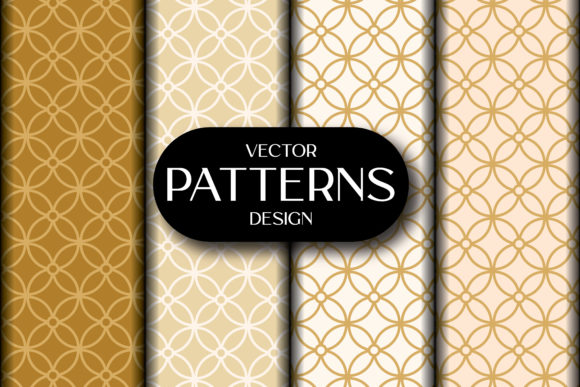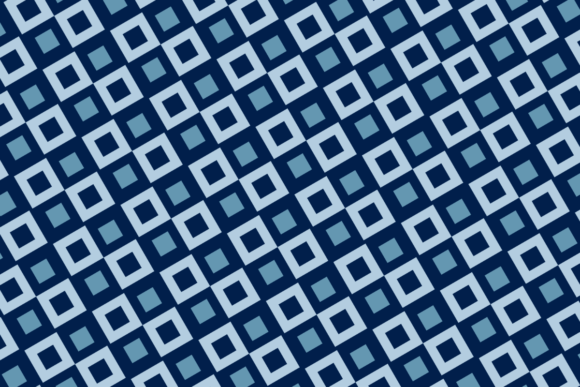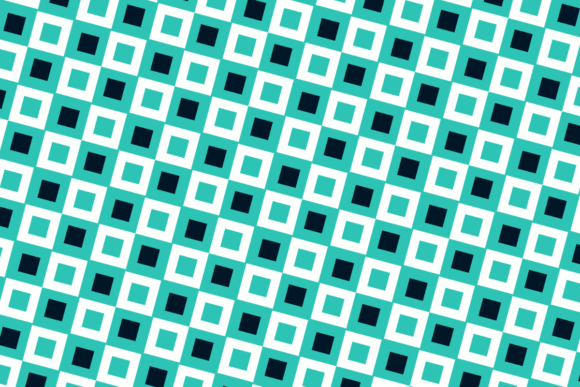
Understanding Abstract Seamless Geometric Patterns
Picture a design that repeats endlessly without a single visible seam or interruption. That is the core idea behind abstract seamless geometric patterns — digital or hand-drawn motifs built from shapes, lines, and angles that tile perfectly in every direction. These are not realistic depictions of objects. They lean into circles, triangles, hexagons, intersecting curves, and bold polygons arranged in ways that feel both mathematical and expressive. The "seamless" part means you can place copies of the pattern side by side, top to bottom, and never spot where one tile ends and the next begins. That smooth repetition makes them incredibly versatile for backgrounds, textiles, branding, and screen-based media.
For anyone who has ever tried to line up a repeating image and ended up with awkward gaps or obvious grid lines, seamless patterns solve a very real frustration. Designers, small business owners, and hobbyists turn to them because they provide a polished, professional look without hours of manual tweaking. And because they are abstract rather than literal, they carry a timeless quality that does not tie itself to a specific trend or season.
What Makes a Geometric Pattern Truly Seamless
Seamless tiling is not simply about placing shapes in a square and hoping for the best. A properly constructed abstract seamless geometric pattern is engineered so that elements touching the left edge wrap perfectly to the right edge, and the same applies vertically. When done well, the result feels organic, as if the design could extend infinitely across any surface. Common building blocks include repeating diamonds, overlapping chevrons, tessellating triangles, concentric circles, and interlocking cubes. The color palette can range from soft, muted earth tones to high-contrast neon combinations, depending on the intended mood and medium.
The abstract nature of these designs is part of their strength. Without recognizable imagery, the viewer's eye focuses on rhythm, balance, and movement. A pattern might use scale variation to create depth, clustering smaller triangles in one zone and gradually enlarging them toward another. Others rely on symmetry and precise spacing to evoke calm and order. Some introduce intentional irregularity — a motif that rotates slightly, a line that breaks — to keep the repetition from becoming static or predictable.
Why People Are Drawn to Abstract Geometric Designs
There is a psychological appeal to structure and repetition. Humans are pattern-seeking by nature. Geometric forms satisfy that desire while leaving room for interpretation. Unlike floral or representational patterns, abstract geometrics do not tell a specific story. They set a tone. A pattern of sharp angular lines might energize a composition, while softly rounded overlapping circles can soothe and reassure. This adaptability is a major reason why creators across so many fields keep returning to them.
From a practical standpoint, abstract seamless geometric patterns help solve several common design challenges:
- Consistency across formats: A seamless tile works equally well on a business card or a billboard because it scales without losing integrity.
- Reduced file complexity: Instead of building a massive high-resolution file, you can work with a smaller repeatable tile and let the software do the rest.
- Brand cohesion: Repeating a custom geometric pattern across packaging, social media, and website backgrounds creates a subtle but powerful visual thread.
- Time savings: For entrepreneurs and marketers running lean operations, ready-made seamless patterns cut down on production hours significantly.
Where These Patterns Show Up in Everyday Life
You encounter abstract seamless geometric patterns more often than you might realize. Textile designers use them on upholstery fabrics, scarves, and bedding. Interior decorators apply them to wallpaper, floor tiles, and rugs. In the digital realm, they appear as website backgrounds, app splash screens, presentation slide decks, and social media graphics. Packaging designers wrap them around boxes and labels to give products a contemporary edge without relying on photography or illustration. Even educators incorporate them into classroom materials and printable worksheets to add visual interest without distracting from the content.
Consider a few realistic use cases that illustrate how varied the applications can be:
- A freelance marketer creates a branded Instagram template using a subtle hexagonal mesh pattern as the background layer. The result looks clean and professional, and the pattern is discreet enough that text and images still command attention.
- A small candle business wraps its product labels in a custom repeating diamond motif in warm terracotta and cream tones. The pattern ties the entire product line together while signaling a handmade, artisanal feel.
- An online course creator uses a minimalist line-based geometric pattern across workbook PDFs, slide headers, and course thumbnail images. Learners immediately associate the pattern with the brand, even before reading any text.
- A hobbyist sewist prints a seamless chevron design onto fabric using a print-on-demand service, then stitches it into a tote bag with a completely professional-looking finish.
- A blogger sets a geometric tessellation as the site's subtle background texture, adding visual depth without slowing down page load times.
Digital Tools and Beginner-Friendly Approaches
You do not need to be a professional illustrator to start working with seamless geometric patterns. Many graphic design tools now include pattern-creation features that handle the technical tiling automatically. Adobe Illustrator has a dedicated Pattern Mode that lets you adjust spacing, overlap, and tile shape in real time. Affinity Designer, Procreate, and Canva each offer their own methods for building repeating tiles. For those who prefer to work with ready-made assets, countless marketplaces sell high-quality abstract seamless geometric patterns as digital downloads, complete with vector files and transparent PNGs at multiple resolutions.
Beginners often find success by starting with simple geometric shapes — squares, triangles, or dots — and experimenting with rotation and symmetry before layering on complexity. Observing how classic geometric patterns from Islamic art, Art Deco, and mid-century modern design handle repetition can spark new ideas without requiring formal training. The learning curve is gentle enough that within an afternoon, someone new to design can create a working repeat that prints beautifully.
Creative and Commercial Value for Different Audiences
For entrepreneurs and small business owners, custom or carefully chosen geometric patterns act as silent brand ambassadors. A distinctive pattern on tissue paper, inside a thank-you card, or as part of an email header reinforces recognition in ways that feel less aggressive than a logo plastered everywhere. For bloggers and content creators, these patterns provide endless visual material for pin graphics, video backgrounds, and digital products like e-books or checklists. Educators find them useful for crafting visually organized handouts that look thoughtfully designed rather than thrown together.
There is also a growing community of surface pattern designers who license their geometric designs to manufacturers of fabric, stationery, and home goods. What begins as a personal creative exploration can evolve into a passive income stream when designs are uploaded to print-on-demand platforms or sold directly to companies looking for exclusive patterns. The barrier to entry is low, but the potential reach is enormous.
Common Pitfalls and What to Watch For
Even with helpful tools, certain mistakes can undermine the impact of an abstract seamless geometric pattern. Scale is one of the most frequently overlooked factors. A pattern that looks balanced on a screen may appear overwhelmingly dense or disappointingly sparse when printed at full size. Testing prints on your intended material before committing to a large run saves money and frustration. Color contrast also deserves careful attention. Extremely high-contrast geometric patterns can cause visual vibration or eye strain when used extensively, especially on digital screens. Dropping the contrast slightly or introducing a neutral buffer color often resolves the issue without sacrificing energy.
Another consideration involves the rhythm of the repeat. If the foundational tile is too small and the motifs within it are too uniform, the brain quickly spots the repetition grid, which can make even a well-constructed pattern feel mechanical. Introducing slight variations, overlapping elements, or secondary motifs within the tile can break up that predictability. Finally, always check how a pattern reads at different distances. A geometric design that looks precise and crisp up close may turn muddy or lose its definition when viewed from across a room or on a mobile device.
Choosing the Right Pattern for Your Project
Selecting the right abstract seamless geometric pattern involves more than picking something that catches your eye. Think about the emotional response you want to invite. Sharp angles and tight spacing tend to feel energetic, modern, and assertive. Curves, circles, and loops read as inclusive, gentle, and approachable. Monochromatic palettes can signal sophistication and restraint, while multi-colored designs often express playfulness and creativity. Also consider the practical context: a pattern destined for a fabric sofa cushion will interact with folds and curves differently than one laid flat on a website header. The best approach is to gather a few options, test them in the actual environment, and observe how they behave under real-world conditions.
Ethical and Legal Considerations
When sourcing or using geometric patterns, pay attention to licensing terms. Not all patterns labeled as seamless are free for commercial use. If you plan to use a design on products for sale, in client work, or as part of a brand identity, verify that the license permits those specific uses. Many independent designers rely on licensing fees for their livelihood, and respecting those terms supports the creative ecosystem. When in doubt, purchasing a commercial license or commissioning a custom pattern provides clarity and legal protection. Creating your own patterns from scratch also sidesteps these concerns entirely and gives you complete control over the final look.
Expanding Your Skills and Finding Inspiration
For those who want to move beyond using pre-made patterns and start crafting their own, a wealth of free and paid resources exists. Online tutorials walk through the process of building seamless repeats in various software programs. Museums and historical archives offer rich visual libraries of geometric motifs from cultures around the world, providing endless inspiration rooted in centuries of craft tradition. Simple exercises — like taking a single triangle and exploring every possible way to repeat, rotate, and overlay it — can lead to surprisingly sophisticated results. The key is to stay curious and treat early experiments as learning opportunities rather than finished products.
Geometric pattern design sits at a rewarding intersection of logic and creativity. The rules of tiling provide a framework, but within that framework, the possibilities are essentially limitless. Whether you need a quick background for a social media post, a signature fabric for your next product launch, or a meditative creative hobby, abstract seamless geometric patterns offer a practical, beautiful, and endlessly adaptable solution.