The Pixelated Past: How 90s Nostalgia Patterns and Digital Papers Shape Modern Creativity
In the seemingly endless scroll of modern digital life, a distinct aesthetic has resurfaced with surprising force. It’s a visual language of vibrant geometric patterns, shimmering gradients, and faux paper textures that feels instantly familiar to anyone who grew up with dial-up internet and Trapper Keepers. This is the world of 90s nostalgia patterns and digital papers, a creative revival that is more than just a fleeting trend. It’s a bridge between analog memories and digital tools, offering a unique palette for expression in our contemporary world.
Decoding the Visual Vocabulary: What Are 90s Nostalgia Patterns?
To understand this phenomenon, we must first define its core elements. 90s nostalgia patterns refer to the specific graphic motifs that dominated popular culture in the 1990s. These were born from a unique technological moment: the early days of digital design software, the limitations of early web graphics, and a strong, pre-digital influence from physical crafts and school supplies.
The Hallmarks of the Era
Key patterns include:
- Geometric Abstracts: Bold zigzags, checkerboards, and lozenge shapes often in high-contrast, saturated colors.
- Psychedelic & Marble Swirls: Tie-dye effects and liquid marble textures, popular on everything from website backgrounds to CD inserts.
- “Faux” Textures: Digital simulations of real-world materials like crumpled paper, denim, metallic foil, and terrazzo.
- Celestial & Cosmic Motifs: Glittery stars, simple suns, and rainbow gradients evoking a sense of optimistic futurism.
- Doodle & Hand-Drawn Elements: Scribbly borders, smiley faces, and hearts that echoed the pen-and-paper doodles in school notebooks.
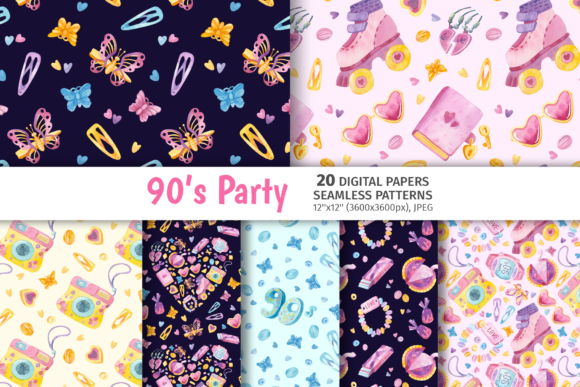
Meanwhile, digital papers are the modern, functional descendants of these patterns. They are ready-to-use digital image files—often in JPEG or PNG format—that replicate these classic designs. Think of them as the virtual equivalent of the scrapbook paper or decorative binder sheets you might have bought at a craft store in 1998. They serve as backgrounds, textures, and overlays in everything from social media graphics to professional presentations.
Why Now? The Purpose and Significance of This Revival
The resurgence of these patterns isn't arbitrary. It serves several profound purposes in our current culture.
A Digital Comfort Food
For millennials and older Gen Z, these visuals are a form of visual comfort food. They tap into a collective memory of a time perceived as simpler, more optimistic, and brimming with creative potential—even if that memory is romanticized. In an often chaotic digital present, these patterns offer a sense of familiarity and security.
Bridging the Analog-Digital Gap
The 90s was a transitional period. We were still writing on physical paper, but we were also starting to experiment with Photoshop 3.0. Today’s digital papers directly honor this hybrid experience. They allow creators to inject the tactile, handmade feel of analog crafts into purely digital projects, softening the sometimes cold, minimalist aesthetics of contemporary tech.
A Reaction to Minimalism
After decades of sleek, flat design dominated by corporate minimalism (think the iOS 7 overhaul), there’s a craving for maximalism, texture, and personality. 90s patterns are inherently busy, joyful, and unapologetically decorative. They offer a way to break free from sterile design norms and add a splash of playful individuality.
Practical Relevance: Where These Patterns Live Today
Far from being confined to retro-themed blogs, this aesthetic has found practical, widespread application across modern domains.
In Business & Branding
Forward-thinking brands use elements of 90s patterns to convey fun, accessibility, and nostalgia. A tech startup might use a geometric pattern in its app’s loading screen to feel more approachable. A sustainable clothing brand could use a digital paper resembling recycled notebook paper in its social media campaign to emphasize an eco-conscious, handmade ethos. It’s a tool for building brand personality and connecting with audiences on an emotional level.
In Education & Content Creation
Teachers and educational content creators use these digital papers to make materials more engaging. A worksheet with a starry background or a presentation slide with a subtle marble swirl can make learning visually stimulating, especially for younger audiences. YouTube creators and podcasters often employ these patterns in their channel art or video backgrounds to establish a vibrant, energetic tone.
In Daily Creativity & Social Media
This is perhaps the most common arena. Anyone making Instagram stories, Pinterest mood boards, or digital invitations can leverage vast libraries of downloadable digital papers. They enable personal projects—like a digital birthday card with a glitter pattern or a personal blog header with a doodle border—to have a polished, thematic look without requiring professional design skills.
Clarifying Misunderstandings: It’s Not Just “Kitsch”
A common assumption is that this trend is purely about ironic kitsch or a shallow, nostalgic meme. While humor is certainly a component, that view misses the depth.
First, these patterns are now being used with a much more refined color palette and composition. Modern adaptations often tone down the blinding neon, opting for muted versions or combining classic motifs with contemporary layouts. The result is sophisticated nostalgia, not mere replication.
Second, the movement is closely tied to the broader appreciation of Y2K aesthetics and the “analog revival”—a genuine appreciation for the tactile interfaces and physical objects of the pre-smartphone era. Using a digital paper that looks like a spiral notebook isn't just a joke; it’s a deliberate choice to bring a sense of physicality into a digital space.
How to Engage with 90s Patterns and Digital Papers
If you're inspired to explore this creative toolset, here’s a practical approach.
- Find Your Source: Many websites and marketplaces offer free or paid packs of high-quality digital papers. Look for bundles themed “90s,” “Y2K,” “retro geometric,” or “faux texture.”
- Start with Overlays: The simplest use is as a background. Place the digital paper file behind your text or main image in a design tool like Canva, PowerPoint, or even a simple photo editor.
- Experiment with Mixing: Don’t use patterns in isolation. Try pairing a bold zigzag pattern with a clean, modern font. Or use a subtle, crumpled paper texture as a background for a minimalist photo. The contrast often creates the most interesting effect.
- Think Beyond Decoration: Consider the emotional or thematic message. A celestial star pattern might be perfect for a project about dreams or goals. A terrazzo texture could lend an artistic, studio-like feel to a portfolio.
Building a Broader Understanding: The Pattern as a Cultural Lens
Ultimately, the journey through 90s nostalgia patterns and digital papers is more than a design tutorial. It’s a way to understand how visual culture cycles and technology shape memory. The patterns of an era are frozen artifacts of its technological capabilities, its social moods, and its creative aspirations.
By repurposing these artifacts today, we are actively participating in a cultural conversation. We are saying that the optimism, the hybrid analog-digital experimentation, and the unabashed joy of certain 90s aesthetics still hold value. We are using them to add warmth, history, and human touch to our increasingly streamlined digital environments.
So, the next time you see a website with a shimmering gradient background or a social media graphic using a digital paper that looks like your old science binder, recognize it as more than a retro trend. It’s a purposeful creative choice, a nod to a shared sensory history, and a tool for building a digital world that feels a little more colorful, textured, and personally resonant.