The Emergence of Generative Tracery in Pattern and Design Systems
The contemporary landscape of digital art, procedural design, and narrative generation is witnessing a subtle yet profound shift. Tools and methodologies that embrace structured randomness are moving from niche curiosities to foundational components in creative and analytical workflows. Among these, a concept that intertwines abstract visual motifs with generative grammar has begun to chart a unique path. This approach leverages the principles of pattern creation—specifically the recurring, often circular forms found in everything from architectural blueprints to biological diagrams—and marries them with the dynamic, rule-based text expansion of tracery. The synthesis offers a framework for creating not just static images or linear stories, but expansive, interconnected systems of meaning and form.
A Practical Foundation: Understanding the Core Components
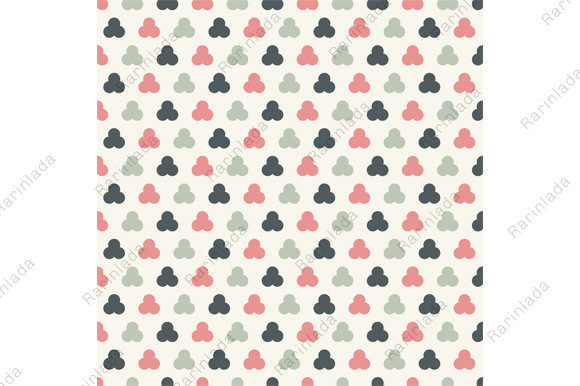
To grasp the utility of this combined methodology, it's helpful to dissect its elements. Abstract circles patterns are more than simple geometric repetitions. They represent a fundamental organizational principle: a closed loop, a node, a focal point, a cycle. In data visualization, a circle can denote a network hub. In user interface design, it might signal a button or a status indicator. In abstract art, it can evoke balance or infinity. Patterns built from these forms create rhythm, hierarchy, and relationship.
Tracery, on the other hand, originates from a different domain. It is a lightweight, JSON-based tool for context-free grammar expansion, often used for generating branching narratives, interactive poetry, or dynamic dialogue. You define a set of rules and seed symbols, and the engine recursively expands them into unique, coherent outputs. Its power lies in structure beneath variety.
When these two worlds converge, the outcome is a system for generating patterned descriptions, procedural instructions, or semantic networks. One could, for instance, use a tracery grammar where the base symbol "node" expands to a description of a circular pattern element: "[color] circle with [density] interior lines". Another rule might define how these nodes connect: "arranged in a [layout] pattern with [spacing] intervals". By executing this grammar repeatedly, you generate a suite of unique, yet stylistically consistent, pattern specifications. These textual outputs can then be interpreted by a designer, fed into a visualization algorithm, or used as metadata for a searchable pattern library.
Characteristics of a Tracery-Driven Pattern System
Systems built on this principle exhibit several key traits. They are inherently variational, producing a family of outputs rather than a single artifact. They are semantically rich, as each generated description carries defined attributes (color, size, relationship) that can be parsed and processed. They are also composable. A pattern grammar for "security icons" can be merged with a grammar for "background textures" to generate compound design briefs. Finally, they are often human-readable at the intermediate stage, allowing for creative curation and editing before final rendering.
Real-World Relevance and Professional Applications
The practical value of this methodology unfolds across several fields. In graphic design and branding, agencies can use it to rapidly generate a spectrum of logo concepts, background patterns, or icon set variations that adhere to a defined stylistic grammar. This moves beyond random generation to controlled, thematic exploration.
For user experience researchers and interface designers, generating descriptions of different layout patterns (circular navigation hubs, radial menus) can help prototype and test various information architectures without immediately committing to costly visual mockups. The textual descriptions can be used in wireframing tools or user scenario scripts.
In game development and world-building, tracery grammars can describe the patterns found in a fictional culture's art, the architecture of its cities (circular plaza layouts, patterned window arrays), or the symbols used in its magic systems. This creates deep, consistent lore that feels organic and discoverable.
Data scientists and analysts might find use in generating procedural descriptions for chart types or data point arrangements. A grammar could specify various "circle chart" patterns for different data storytelling contexts, aiding in the automated selection of appropriate visualizations.
Even in education and creative workshops, the process of building a pattern tracery grammar teaches foundational concepts in systems thinking, combinatorial creativity, and the relationship between rules and expression.
Considerations for Implementation
Adopting such an approach requires thoughtful planning. The initial investment lies in crafting a robust and expressive grammar. This demands a clear understanding of the pattern domain's parameters. What are the core symbols? What are their allowable modifiers? Poorly defined rules lead to incoherent or repetitive outputs.
Secondly, there is a decision point on automation. Will the textual outputs be manually interpreted, or will they be parsed by another software layer to produce final visuals? The latter requires a consistent output syntax and potentially a custom interpreter.
Finally, there is the consideration of originality and surprise. While the system generates variation, its boundaries are set by its creator. It can produce novel combinations within a frame, but truly disruptive ideas outside the grammar's scope will not emerge. This makes it a tool for explorative iteration rather than raw inspiration.
Observing Emerging Use Cases and Workflows
Current applications are often hybrid, blending human and machine creativity. A common workflow observed in digital art communities involves a creator defining a pattern tracery grammar based on a mood or theme—say, "crystalline structures". The grammar generates hundreds of pattern descriptions. The artist then selects a dozen that resonate, using them as direct prompts for a manual drawing session or as input parameters for a procedural rendering tool like Processing or Houdini.
In a more technical domain, some API documentation generators are experimenting with similar concepts. Descriptions of code module interaction patterns—visualized often as circular node diagrams—are generated from grammars to create diverse examples for different use cases, making documentation more comprehensive and scenario-specific.
A notable observation is the trend toward meta-patterns. Grammars are not only describing the final visual pattern but also the process of its creation or evolution. For example, a rule might expand to "a pattern of circles that emerges from the center and diffuses outward over five stages". This adds a temporal or procedural dimension, useful for animation scripts or generative art timelines.
The Balance Between Control and Serendipity
A core advantage of using abstract circles patterns tracery is the fine balance it offers. The creator establishes the vocabulary, the rules of composition, and the stylistic palette. This provides control and ensures brand or thematic consistency. Yet, within those rules, the combinatorial engine produces specific instances that the creator may not have preconceived. This serendipity within a framework can break creative blockades and reveal appealing configurations that pure manual design might overlook. It turns the design process into a dialogue with a system built by the designer.
Evaluating the Long-Term Trajectory
As generative tools become more integrated into mainstream creative software, the principles underlying pattern tracery are likely to become embedded features. Imagine a panel in a design application where you define a "pattern style" using a simple rule-set, and the software generates an infinite scroll of variants on the canvas for you to choose from. The textual grammar layer may become invisible, but its logic will persist.
The methodology also promotes a valuable mindset: thinking in terms of generative systems rather than singular artifacts. For businesses, this translates to asset libraries that are dynamic and adaptable, capable of producing on-brand variations for countless contexts without constant manual redesign. For educators, it provides a concrete model for teaching algorithmic thinking and design systems.
Ultimately, the interplay of abstract circles patterns and tracery is less about a specific tool and more about a paradigm. It demonstrates how structured, rule-based generation can be applied to visual and conceptual domains traditionally governed by intuition and manual craft. The result is not the replacement of the creator, but the augmentation of their capability with a system that extends their intent into a landscape of possibilities, ensuring both relevance and a unique exploration of form and meaning.